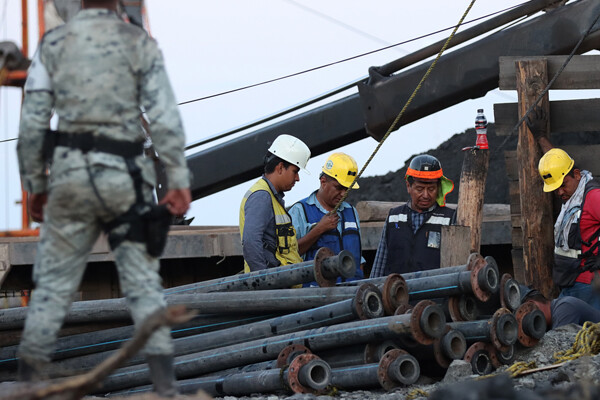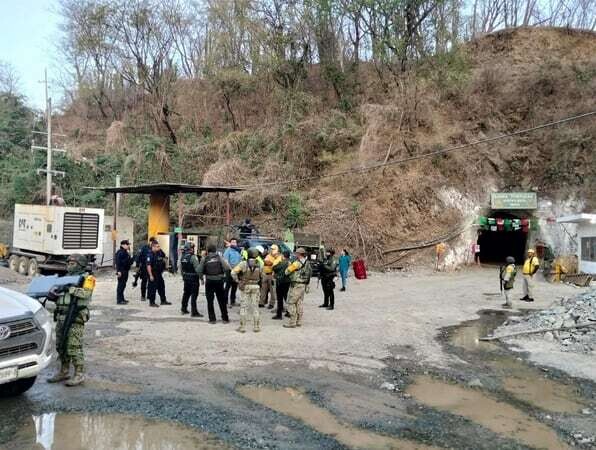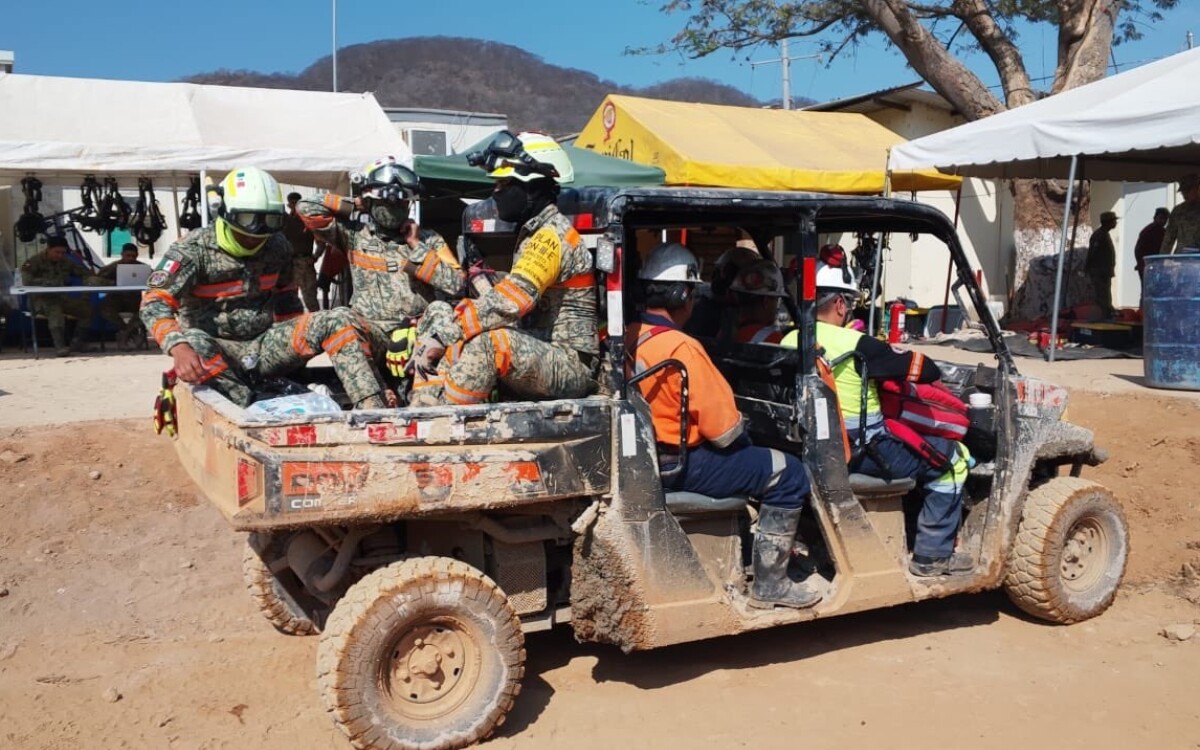
More than 300 elements are participating in the rescue of four miners trapped in the Santa Fe mine, in the municipality of El Rosario, Sinaloa, reported the National Coordination of Civil Protection (CNPC) and the Secretariat of Security and Citizen Protection (SSPC).
Likewise, 42 units are working 24 hours a day, organized in operational relief periods, with the priority objective of safeguarding the lives of the rescuers, after the collapse that occurred last Wednesday, March 25. In addition, specialists from the Federal Electricity Commission (CFE) have joined, who will support in the definition of technical strategies, as well as the rescue squad of the Frisco Group coming from Chihuahua.
The maneuvers are being carried out at 300 meters deep, facing the presence of muddy material that hinders progress, although the brigades operate under optimal ventilation conditions and an approximate temperature of 25 degrees. It is highlighted that the central objective of these operations is to advance 1.5 kilometers on the ramps, enabling and securing strategic galleries to reach the deepest area where the miners' location is estimated.
To guarantee the safety of the rescuers on this route, a stabilization project for possible structural collapses is being implemented using a thermal mixture with cement, an action that will be reinforced with the use of expansive resin scheduled to arrive in the state on Monday.
The operational period of the rescue cells has been optimized to be extended and to allow deep work within the facilities, while the Geology Department of the company Industrial Minera Sinaloa rigorously supervises each phase of the excavation.
As a vital protection measure, an alarm system remains active during all underground maneuvers to issue timely warnings in case of any risk and to carry out immediate evacuations if the environment requires it.
In parallel, the uninterrupted pumping work in the dam continues to lower the water levels and mitigate additional risks.
Upon the conclusion of each entry of the rescue cells, they are provided with a detailed report on the progress, in addition to guaranteeing them comprehensive psychological attention, coverage of food needs, facilities for personal hygiene, and dignified spaces for rest.
Finally, the CNPC reiterated the call to the population to allow the free passage of emergency vehicles and to follow the evolution of this incident exclusively through institutional channels.
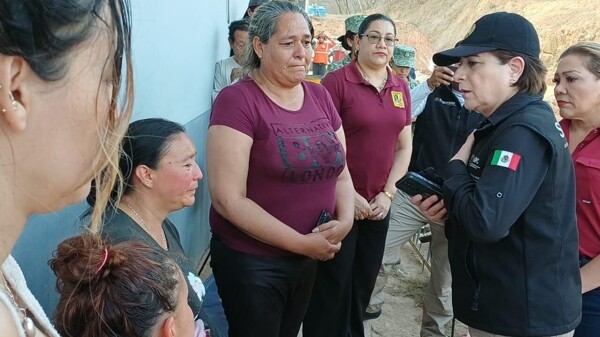
«The sensitive and permanent accompaniment to the families is a pillar of this operation».